ENERGYMADEEFFICIENT.
Glarenergy engineers precision single-axis solar tracking systems designed to increase energy yield, improve plant performance and maximise the value of every solar installation.
- More Energy Yield
- 15–25%
- Wind Rated
- 180 km/h
- Tracking Accuracy
- ±2°
- Ready
- Bifacial
More Energy Yield
Wind Rated
Tracking Accuracy
Ready

- Higher Energy Yield
- 0–0%
- Wind Survival
- 0 km/h
- Tracking Accuracy
- ±0°
- N–S / E–W Terrain Adaptability
- 0%
- Tracker Length
- 0–0 m
Higher Energy Yield
Wind Survival
Tracking Accuracy
N–S / E–W Terrain Adaptability
Tracker Length
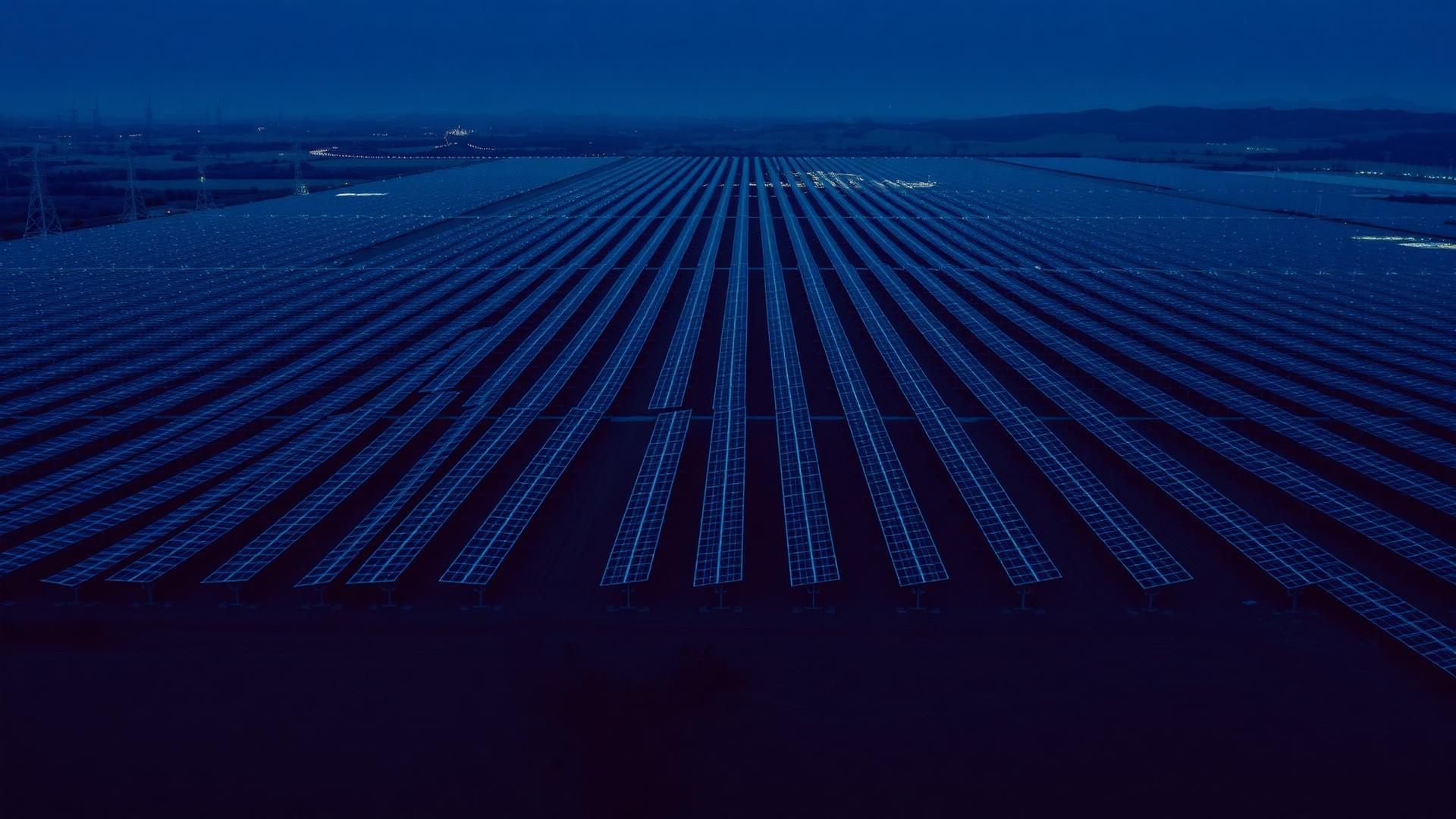
Engineered for utility-scale plants, row after row.
The sun moves. Your panels should too.
A tracker turns through the day so the modules keep facing the sun, capturing more of the available irradiance than a panel locked in one position.
Fixed-tilt panels stay in one position all day. Trackers continuously adjust their orientation toward the sun.
2P-HSATHorizontal Single Axis Tracker
A dual-row horizontal tracker that follows the sun's east-west path with precision motorization and a low-profile design for maximum stability.
Selected component: Drive System. Single point linear actuator, 24V DC motor.
View full specifications1P and 2P, one drive philosophy.
Both configurations share the same single-point drive system and control electronics. The difference is how the modules are arranged.
- Module arrangement
- Two modules in portrait per row
- Tracker configuration
- Horizontal single axis tracker (HSAT)
- Terrain suitability
- Flat terrain; 10% N–S and 10% E–W slope
- Advantages
- Cost-effective land use with shared drive systems
Engineered for real-world solar farms.
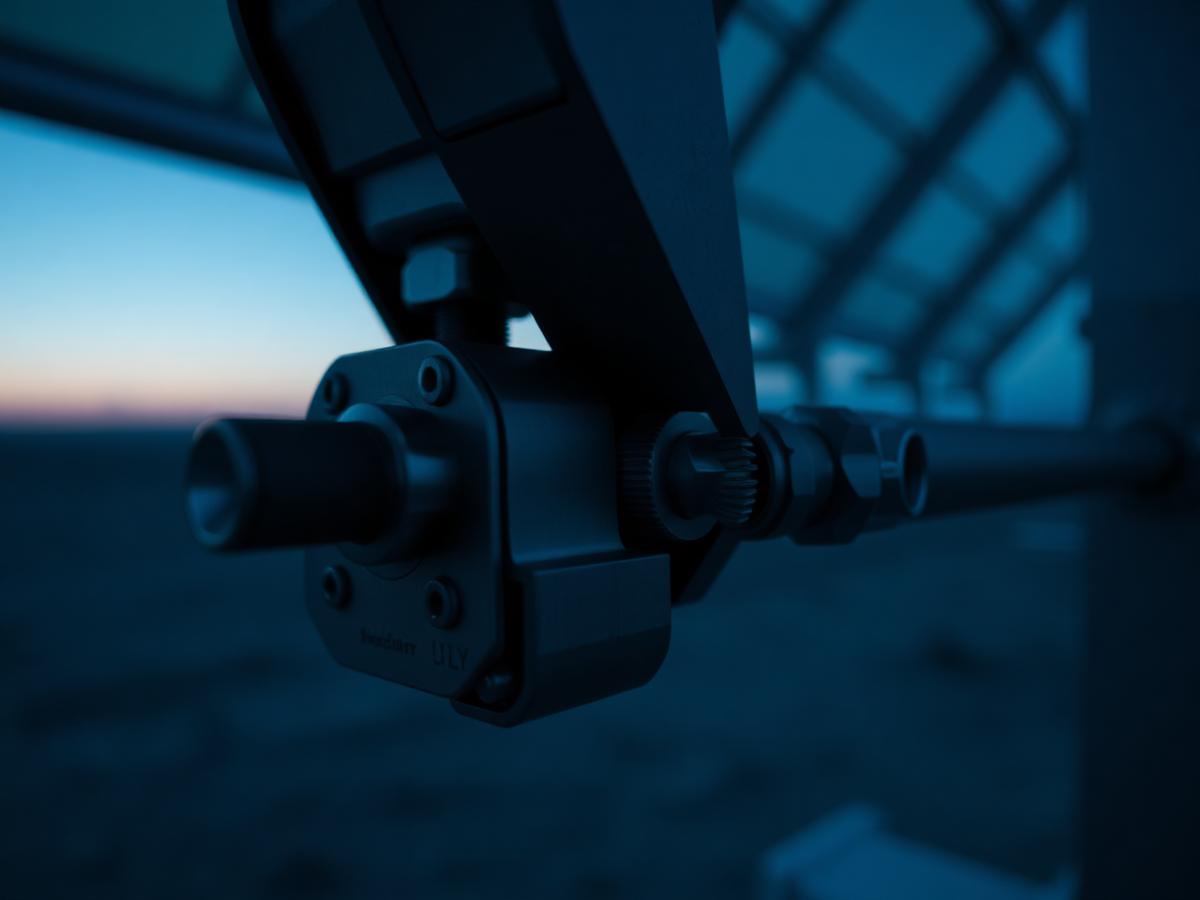
Single-point linear actuator
One drive point per tracker row.
24V DC motor
Low-voltage motorization.
Astronomical tracking algorithm
Astronomical + intelligent control.
±2° tracking accuracy
Held across the rotation range.
Zigbee mesh
Wireless mesh communication between trackers.
Ethernet
Wired plant-level communication.
RS485
Serial communication support.
Nighttime stow
Scheduled stow position after sundown.
180 km/h wind survival
0° stow in extreme wind.
Built for more than perfect terrain.
Trackers install along undulating ground with 10% north–south and 10% east–west slope tolerance, rotating ±45° to ±60° and returning to 0° stow in extreme wind.

How Glarenergy tracks the sun.
- 01
Calculate
Astronomical algorithms determine the sun's position.
- 02
Track
The controller continuously calculates the required tracker angle.
- 03
Move
The single-point linear actuator adjusts the tracker structure.
- 04
Optimize
Panels stay positioned for maximum solar capture, with backtracking to eliminate row-to-row shading.
- 05
Protect
The system responds to high wind and enters 0° stow; nighttime stow on schedule.
A broader generation curve.
A fixed-tilt array peaks briefly at midday. A tracked array holds a productive angle from morning through afternoon — the shaded delta is the additional yield.
Precision is the product.
A renewable energy company built on precision — pioneering solar power with innovative single-axis trackers, empowering solar plants to achieve superior efficiency and output.
Let's build the future of solar.
Have a project in mind? Talk to our team about your solar tracking requirements.